Top 12 B2B Lead Generation Tools for Your 2025 Sales Stack
December 4, 2025
In a market where every inbox is a battlefield, generating a consistent B2B pipeline is the difference between stagnation and scalable growth. The right technology is no longer a luxury; it’s the engine that powers your sales team, transforming raw data into qualified meetings and, ultimately, revenue. Without an effective toolkit, your sales development representatives (SDRs) are left navigating a sea of outdated information, wasting valuable time on manual prospecting instead of engaging high-intent buyers.
This guide cuts through the noise. We've compiled a definitive list of the best b2b lead generation tools, moving beyond generic marketing descriptions to provide a comprehensive resource. You'll find a detailed analysis of each platform, complete with real-world use cases, honest limitations, and practical implementation advice to help you build a powerful, cohesive sales stack. Each review includes screenshots and direct links to help you evaluate your options quickly.
We’ve organized the tools into clear categories to match your specific needs:
- Data & Intelligence: For building accurate, targeted prospect lists.
- Outreach & Engagement: For executing multi-channel campaigns at scale.
- Full-Cycle Automation: For an all-in-one prospecting and engagement solution.
- Research Platforms: For finding validated software and user reviews.
This curated list will help you solve the core challenge of modern sales: balancing scalable automation with the personalized outreach that actually closes deals. And while these platforms are essential for outbound efforts, remember that inbound strategies can complement your pipeline. For instance, you can build a chatbot for lead generation that converts to automatically capture and qualify website visitors 24/7, feeding warmer leads directly into your sales funnel. Let's dive in and find the right tools to fuel your growth.
1. Roger
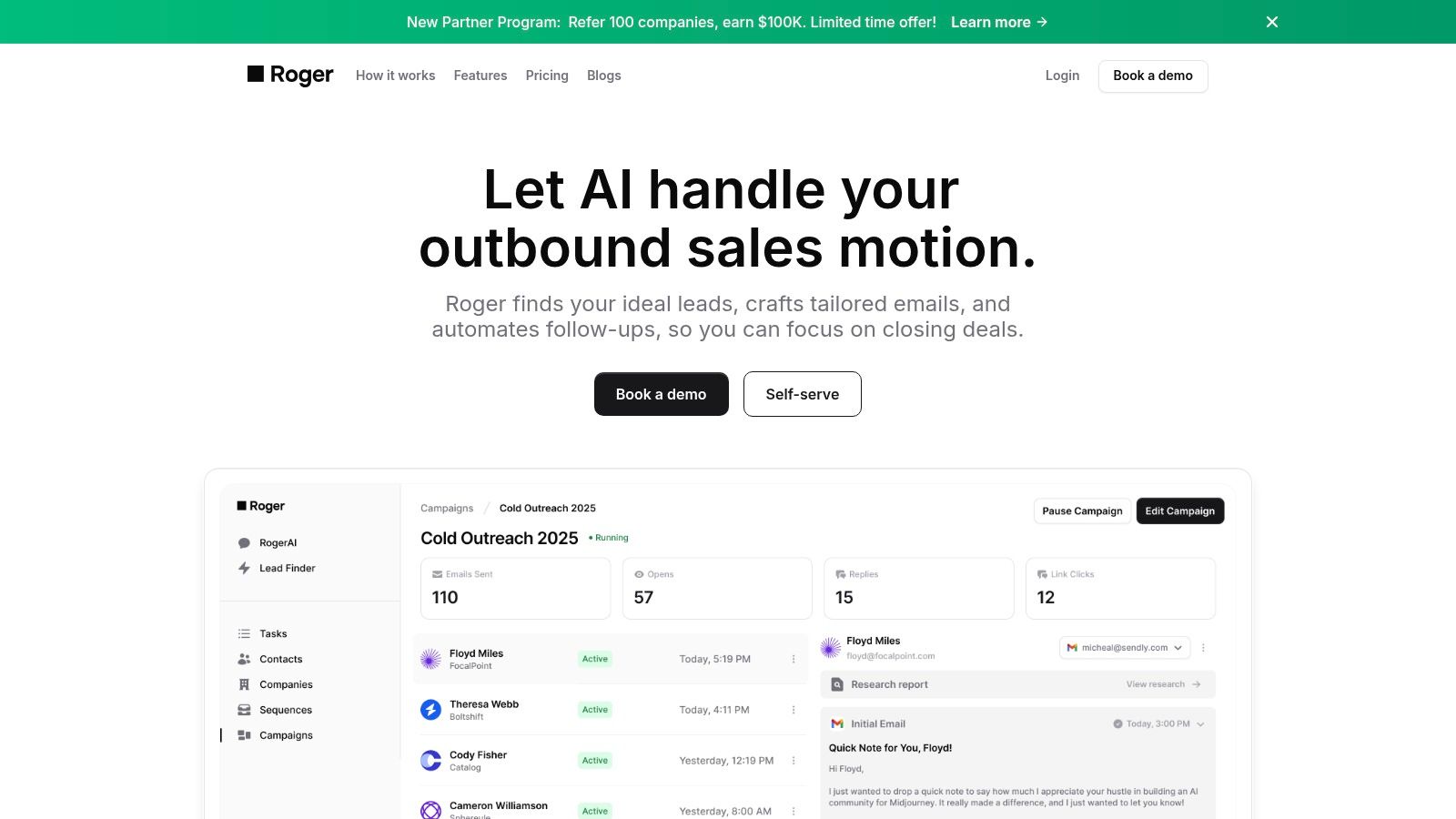
Roger stands out in the crowded market of B2B lead generation tools by offering a true end-to-end outbound automation platform driven by AI. It’s engineered to replace the entire manual prospecting workflow, from lead discovery to personalized outreach, allowing revenue teams to concentrate on high-value activities like closing deals. The platform operates on a simple premise: you define your Ideal Customer Profile (ICP) and campaign goals, and Roger’s AI takes over the rest.
It continuously scours sources like LinkedIn, company websites, and social media to find qualified decision-makers. Roger then verifies their contact information and, most impressively, drafts and sends personalized, multi-channel outreach sequences. The AI analyzes your historical email data to mimic your unique communication style, ensuring authenticity in every message. This combination of automated discovery, intelligent copywriting, and sequenced follow-ups across both email and LinkedIn positions it as a powerful, all-in-one solution.
Why It's Our Top Choice
Roger distinguishes itself by moving beyond simple data scraping or email blasting. Its core strength lies in its ability to deliver research-driven personalization at scale. Each touchpoint is enriched with insights pulled from a prospect's LinkedIn or Twitter activity, making the outreach feel bespoke and highly relevant, which dramatically increases response rates.
Another key advantage is its comprehensive nature. Instead of piecing together multiple tools for list building, email verification, copywriting, and sequencing, Roger integrates these functions into a single, cohesive system. This consolidation not only simplifies the tech stack but also ensures data flows seamlessly through the entire outbound process. The platform provides daily reports and detailed per-lead research summaries, giving sales leaders clear visibility into pipeline health and campaign performance.
Key Features & Pricing
| Feature | Description |
|---|---|
| End-to-End Automation | Manages lead discovery, email verification, personalized copywriting, and multi-channel sequencing. |
| AI-Powered Personalization | Analyzes social signals and historical messages to craft outreach in your authentic voice. |
| Multi-Channel Outreach | Engages prospects across both email and LinkedIn with automated, sequenced follow-ups. |
| Built-in Analytics | Offers daily reporting and per-lead research reports to track performance and refine targeting. |
Pricing:
- Basic: $800/month for up to 800 leads.
- Standard: $2,000/month for up to 2,500 leads.
- Premium: $3,000/month for up to 4,000 leads and real-time Slack support.
- Enterprise: Custom pricing for unlimited sequences, advanced analytics, and dedicated support.
Pros:
- Comprehensive automation reduces manual SDR workload significantly.
- AI-driven personalization leads to higher-quality engagement.
- Flexible, month-to-month plans accommodate growing teams.
- Integrated analytics provide clear performance insights.
Cons:
- The $800/month starting price may be a hurdle for bootstrapped startups.
- Effectiveness relies on careful ICP definition and platform monitoring.
Best For: B2B companies, from startups to enterprises, that need a scalable, automated system to build a predictable outbound pipeline without hiring a large SDR team.
Visit the website: https://hireroger.com
2. LinkedIn Sales Navigator
LinkedIn Sales Navigator is an essential social selling tool, leveraging LinkedIn's unparalleled first-party data to help sales professionals find, connect with, and build relationships with the right prospects. Its core strength lies in its deep integration with the LinkedIn platform, transforming the network from a professional directory into a dynamic B2B lead generation tool. It’s ideal for teams focused on account-based marketing (ABM) and social selling strategies, providing real-time insights into company growth, job changes, and content engagement.
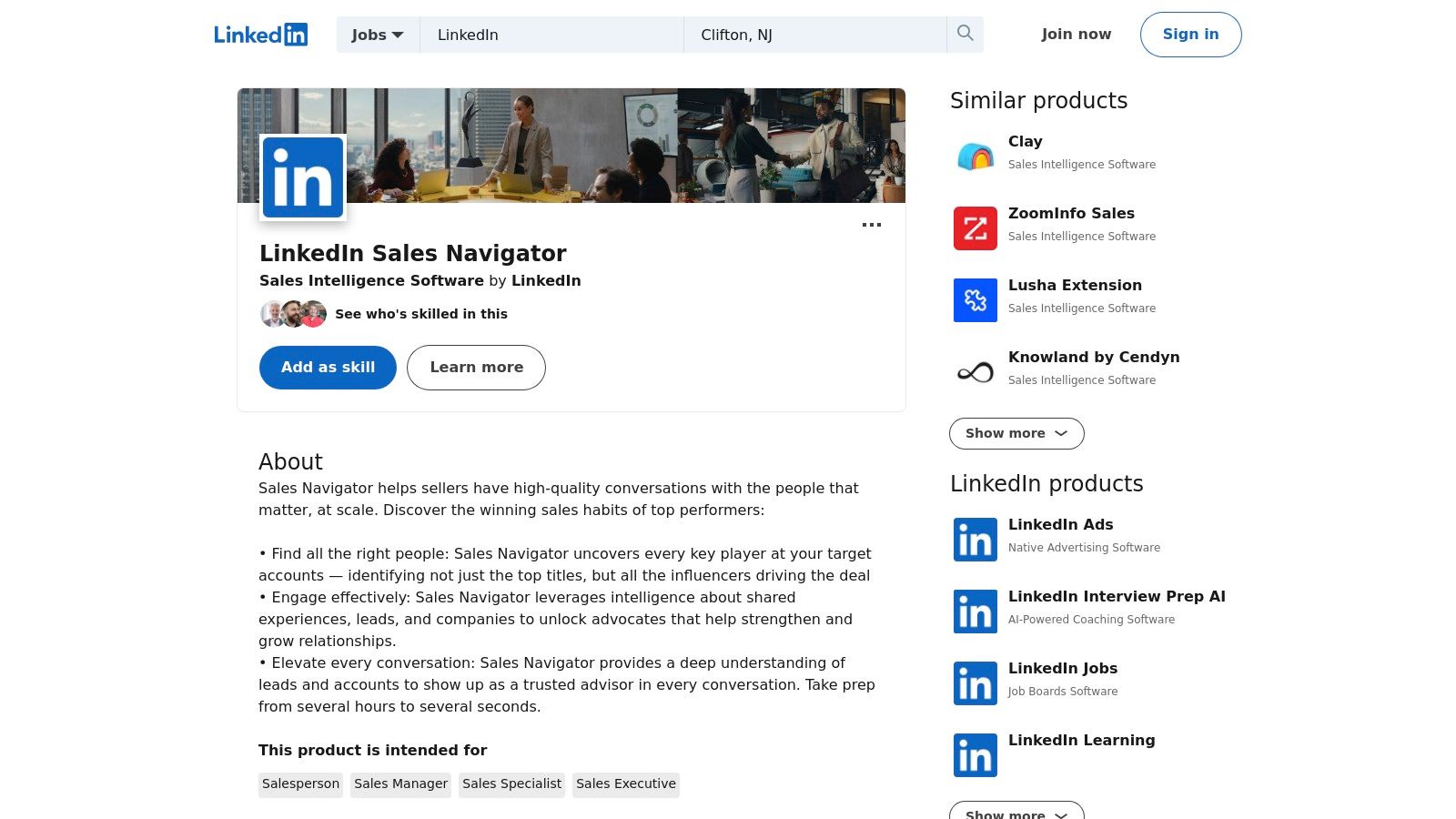
The platform stands out by giving users access to proprietary data signals you can’t get anywhere else, such as a prospect's recent activity, who has changed jobs, and connections within a target account via TeamLink. This allows for highly personalized and timely outreach.
Key Features & Analysis
- Advanced Search & Filtering: Go far beyond standard LinkedIn search with filters for company size, seniority level, function, and recent activity. This is crucial for pinpointing ideal customer profiles with high precision.
- Lead Recommendations & Alerts: The system proactively suggests relevant leads and provides alerts on their key activities, such as when they post content or are mentioned in the news.
- CRM Integration: Higher-tier plans (Advanced and Advanced Plus) offer robust integration with CRMs like Salesforce and Microsoft Dynamics 365, enabling seamless data sync and activity tracking.
Pricing Snapshot
Pricing starts at $99.99/month per user for the Core plan. The Advanced plan, which includes TeamLink and deeper CRM integration, is $149.99/month, while Advanced Plus for enterprise needs requires custom pricing. A free trial is typically available.
Pros:
- Unrivaled access to LinkedIn's first-party professional data and activity signals.
- Excellent for detailed account research and identifying key decision-makers.
- Enables warm outreach based on shared connections and recent prospect activity.
Cons:
- Native lead list exporting is restricted, often requiring manual work or third-party tools.
- The most powerful features, like advanced CRM write-back, are locked behind expensive higher-tier plans.
Website: https://linkedin.com/products/linkedin-sales-navigator/
3. ZoomInfo
ZoomInfo is a comprehensive B2B intelligence platform designed for enterprise-grade revenue teams. It provides a massive database of company and contact information, including direct dials and verified email addresses, positioning itself as a foundational data layer for sales, marketing, and operations. Its strength lies in the depth and breadth of its US-centric data, enriched with intent signals, technographics, and organizational charts, making it a go-to choice for teams needing a powerful, all-in-one data solution.
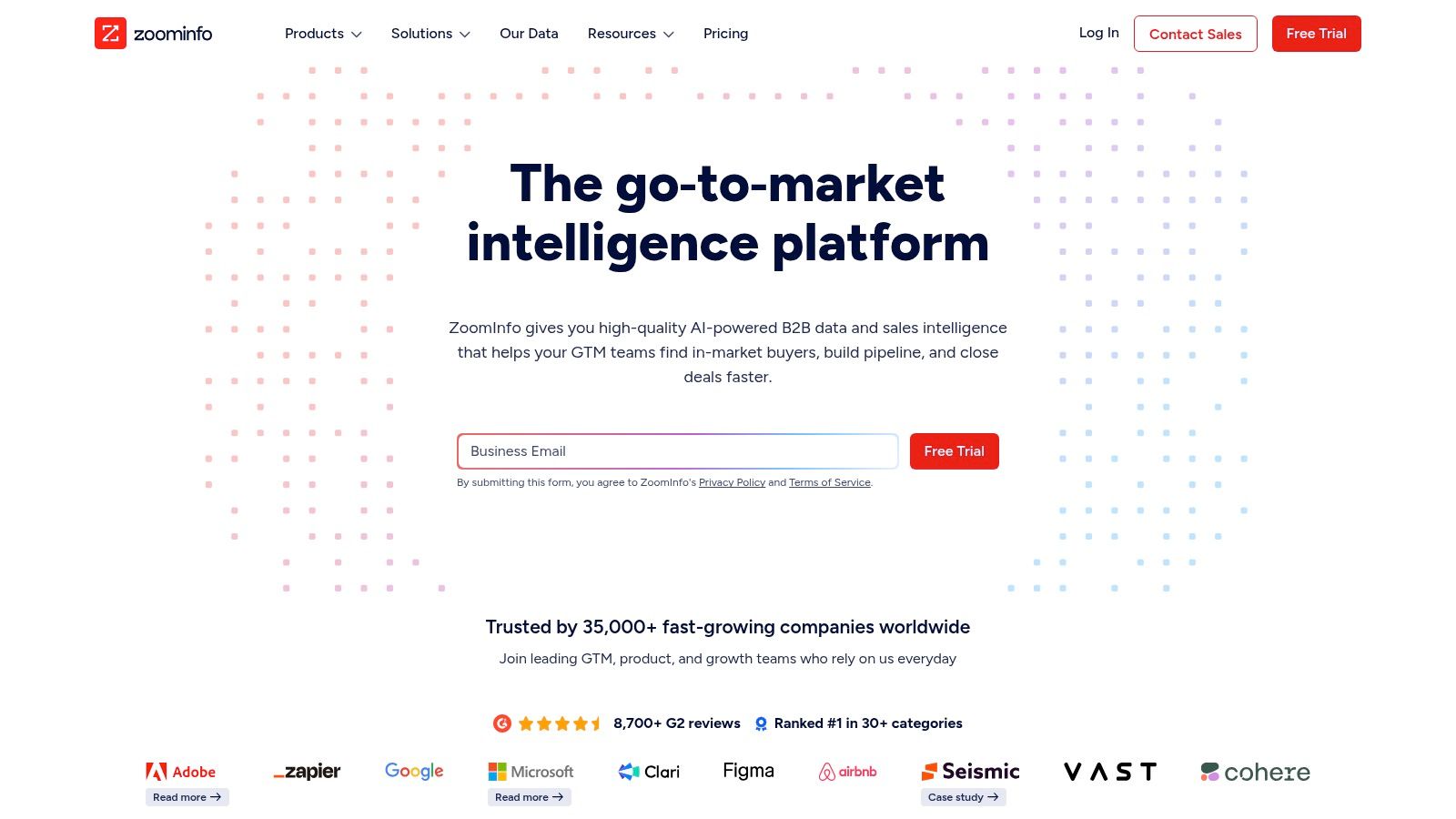
The platform is more than just a contact list; it's a multi-faceted ecosystem (SalesOS, MarketingOS) that helps identify companies actively researching solutions like yours. This makes ZoomInfo one of the most powerful b2b lead generation tools for organizations that can leverage its full suite of features and integrations.
Key Features & Analysis
- Deep B2B Database: Access an extensive repository of contacts and companies with highly specific filters, including technographics (what software a company uses), company attributes, and intent data.
- Intent Data & Web De-anonymization: The "Website Visitor Tracking" feature identifies anonymous companies visiting your site, while intent signals flag accounts researching relevant topics across the web, enabling timely outreach.
- Data Enrichment & Integrations: Seamlessly integrates with major CRMs (Salesforce, HubSpot) and sales engagement platforms (Outreach, Salesloft) to enrich existing records and streamline workflows.
Pricing Snapshot
ZoomInfo’s pricing is opaque and customized based on data credits, user licenses, and feature add-ons. It is typically sold on annual contracts, with costs often starting in the low five figures per year. It is not suited for monthly subscriptions or very small businesses.
Pros:
- Extremely deep and accurate dataset, particularly for direct-dial phone numbers in the US.
- Powerful filtering and list-building capabilities to precisely define ideal customer profiles (ICPs).
- Robust ecosystem of tools, including intent data and data enrichment, for a holistic revenue strategy.
Cons:
- High, non-transparent pricing and a credit-based system can make costs escalate quickly.
- Annual contracts create a significant upfront commitment, which may be prohibitive for smaller companies.
Website: https://zoominfo.com
4. Apollo.io
Apollo.io has emerged as a powerhouse among B2B lead generation tools by bundling a massive B2B database with a full suite of engagement features. It's an all-in-one platform designed for sales teams that want to find, contact, and convert their ideal buyers without juggling multiple subscriptions. This integrated approach makes it an exceptional value for SMBs and mid-market companies aiming to build and scale their outbound pipeline efficiently from a single interface.
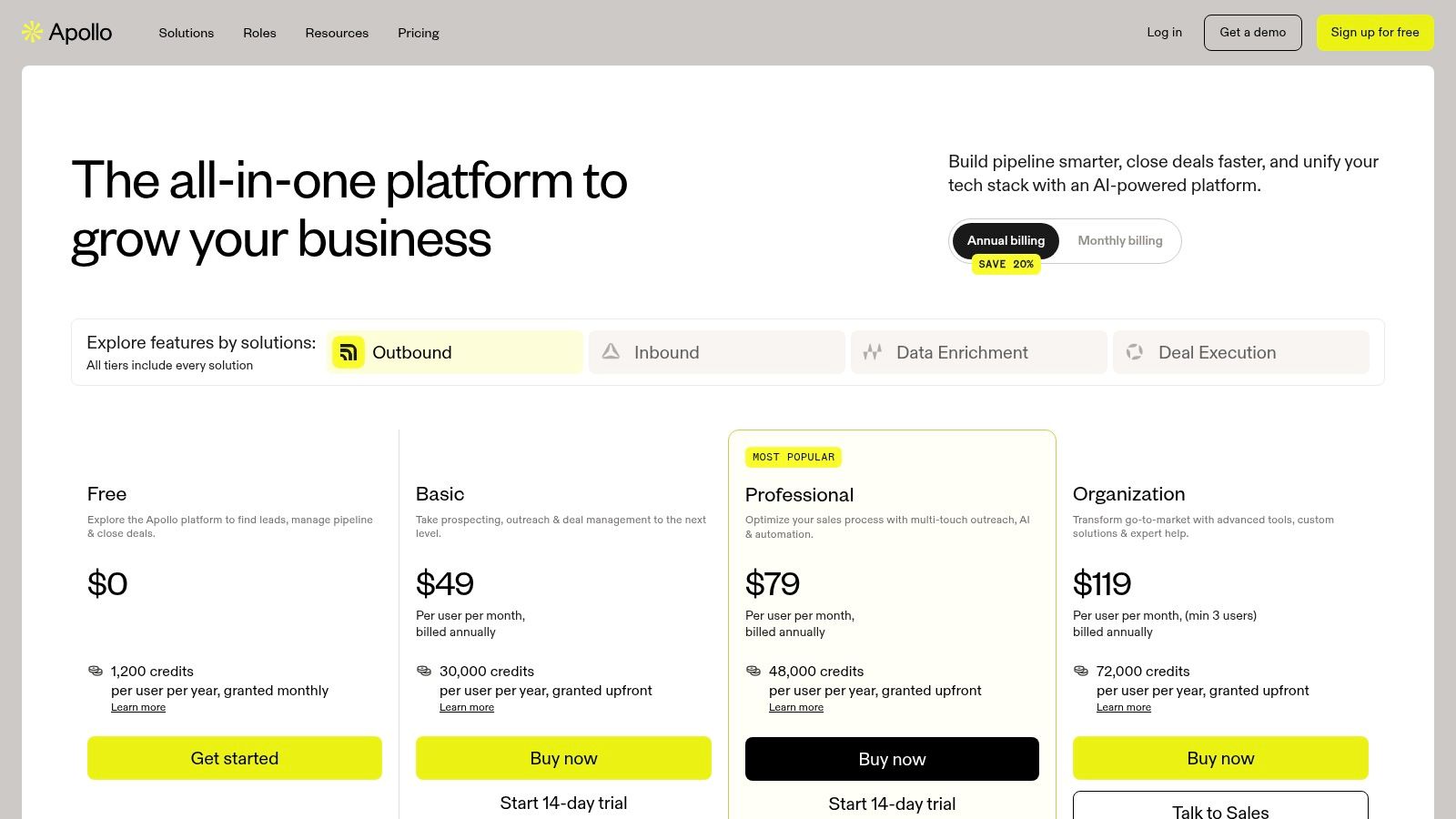
The platform's key differentiator is its combination of data and action. Users can search a database of over 275 million contacts, filter for specific criteria, and then immediately enroll those prospects into automated email sequences, call them with a built-in dialer, or sync them to a CRM.
Key Features & Analysis
- Prospecting Database: Access a vast contact database with filters for location, industry, company size, technology used, and more. Data includes verified email addresses and some direct-dial mobile numbers.
- Engagement Suite: Build and automate multi-step outreach campaigns (Sequences) with emails, calls, and LinkedIn tasks. The platform includes A/B testing to optimize messaging.
- Native Integrations: Connects directly with major CRMs like Salesforce and HubSpot, as well as sales engagement platforms like Outreach and Salesloft, allowing for seamless data flow.
Pricing Snapshot
Apollo.io offers a very generous free plan that includes 60 mobile credits and 120 export credits annually. Paid plans start at $49/month per user (billed annually) for the Basic plan, with the Professional plan at $79/month and the Organization plan at $99/month, each offering more credits and features.
Pros:
- Excellent value, combining a B2B database and engagement tools in one affordable package.
- A powerful free tier allows teams to test the platform's core functionality extensively.
- The all-in-one interface streamlines the prospecting-to-outreach workflow.
Cons:
- Credit and export limitations on lower-tier plans require careful management.
- Lacks the deep enterprise governance and advanced AI features of more specialized, expensive point solutions.
Website: https://www.apollo.io/pricing
5. HubSpot Sales Hub (with Clearbit/Breeze intelligence)
HubSpot Sales Hub has evolved from a powerful CRM into a comprehensive sales engagement platform, making it a central hub for B2B lead generation activities. Its strength lies in combining sales automation, prospecting, and reporting with powerful, newly integrated B2B intelligence from its Clearbit acquisition and "Breeze" data capabilities. This transforms the CRM from a passive record-keeper into an active tool that enriches contacts, reveals intent signals, and automates outreach all in one place.
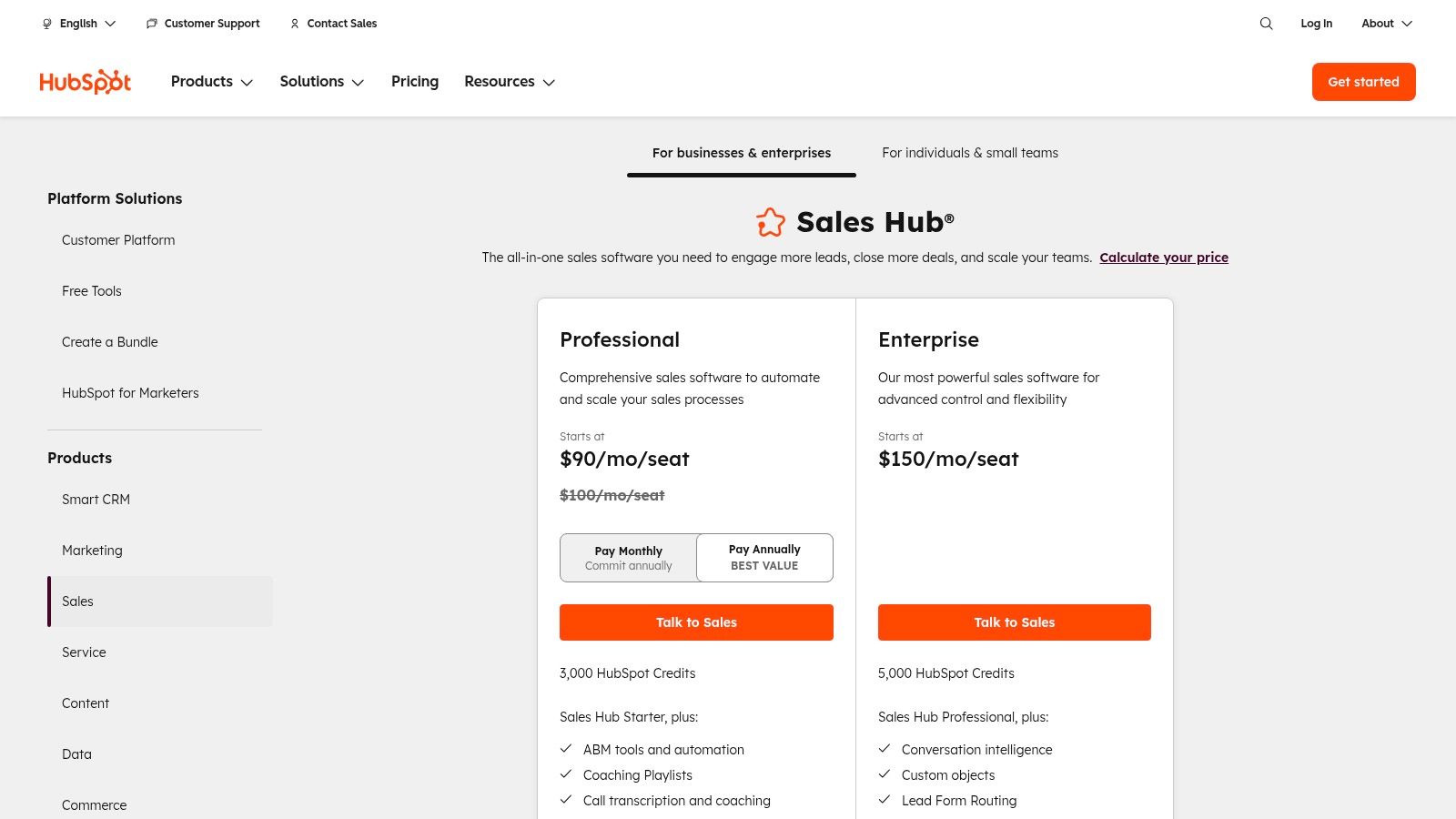
The platform stands out by embedding crucial enrichment and intent data directly within contact and company records. This native integration allows sales teams to build highly targeted lead lists and trigger automated sequences based on real-time company data without juggling multiple tools.
Key Features & Analysis
- Sales Hub Sequences: Automate personalized email outreach and task creation, ensuring consistent follow-up with prospects. This is essential for scaling prospecting efforts without sacrificing personalization.
- Embedded Enrichment & Intent: With integrated Clearbit/Breeze data, HubSpot records are automatically populated with firmographic details and intent signals, giving reps the context they need for effective outreach.
- Extensive App Marketplace: While its native features are strong, HubSpot’s vast marketplace allows for deep integration with hundreds of other sales and marketing tools, creating a truly unified tech stack.
Pricing Snapshot
Pricing is seat-based and tiered. A limited free version is available. The Starter plan begins at $15/seat/month, Professional at $90/seat/month, and Enterprise at $150/seat/month (billed annually). Onboarding fees apply to higher tiers.
Pros:
- A single, unified platform for CRM, sales engagement, and B2B data intelligence.
- Strong ecosystem for training, onboarding, and customer support.
- Flexible seat-based model that can scale with a growing team.
Cons:
- Advanced features are gated behind expensive Professional/Enterprise tiers, which often require mandatory onboarding fees.
- Clearbit's popular standalone free tools have been sunset for new users, pushing them into the paid HubSpot ecosystem.
Website: https://hubspot.com/pricing/sales
6. Lusha
Lusha is a popular B2B contact data provider designed to give sales and marketing professionals quick access to verified emails and direct phone numbers. Its core strength is its simplicity and speed, primarily delivered through a browser extension that works on LinkedIn, company websites, and even within CRMs like Salesforce. This makes it an excellent choice for sales development representatives (SDRs) and account executives who need to enrich contact information on the fly without disrupting their workflow.
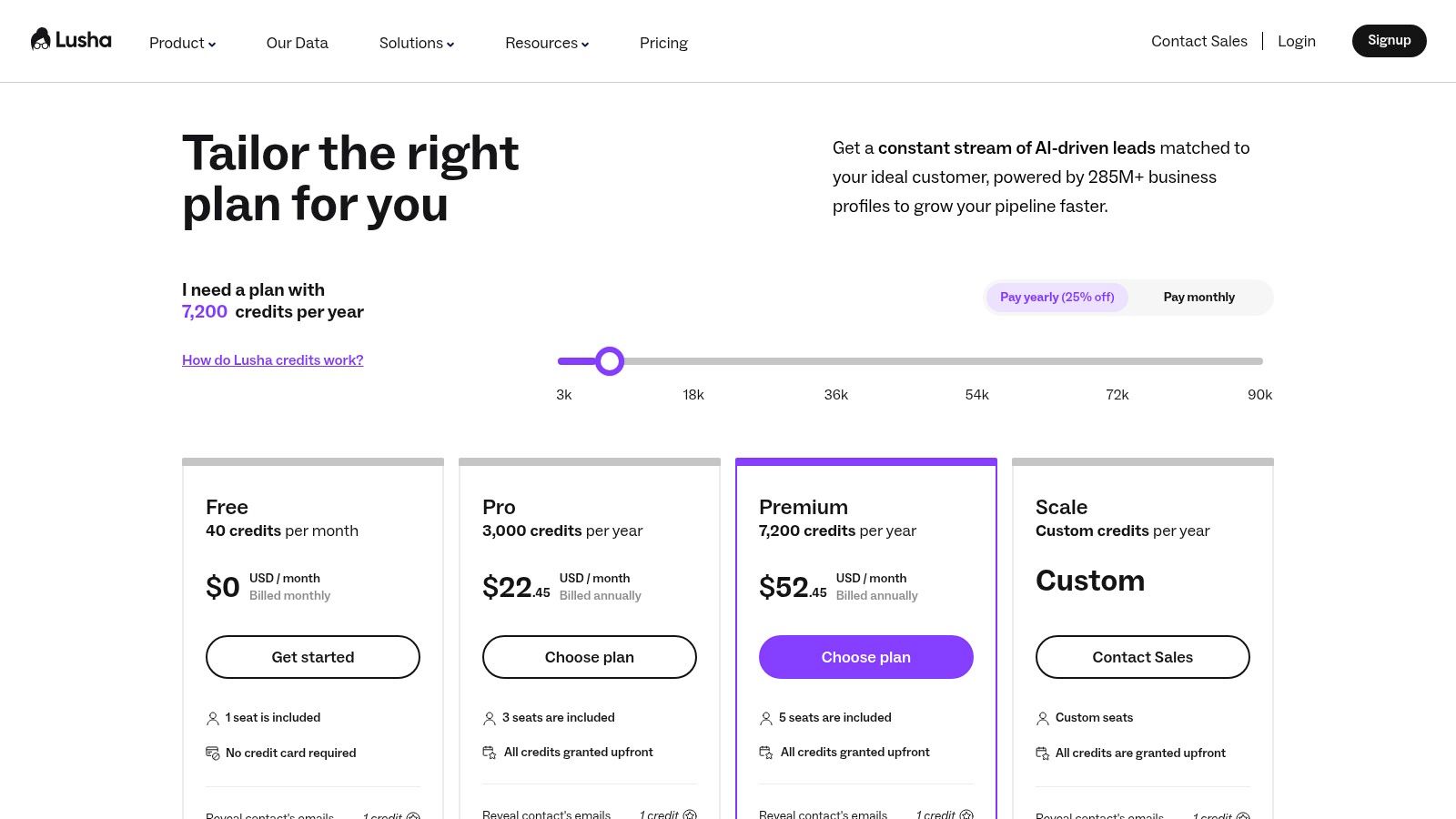
The platform operates on a straightforward credit-based system, making it one of the most accessible b2b lead generation tools for individuals and small teams to start using immediately. Its focus on providing direct dials is a key differentiator, helping reps bypass gatekeepers and connect with decision-makers more efficiently.
Key Features & Analysis
- Browser Extension: This is Lusha's primary delivery method. It overlays on social profiles and websites, allowing users to reveal contact details with a single click, which is ideal for rapid prospecting.
- Credit System: Credits are used to unlock contact information, with different values for emails and phone numbers. This model provides cost control and transparency, though heavy usage can deplete credits quickly.
- CRM & Sales Engagement Integrations: Lusha integrates with major platforms like Salesforce, HubSpot, and SalesLoft, allowing users to save and sync enriched contact data directly to their primary systems.
Pricing Snapshot
Lusha offers a free plan that includes 5 credits per month. Paid plans start with the Pro plan at $29/month per user (billed annually) for 40 credits. The Premium plan at $51/month per user provides 80 credits, and custom Scale plans are available for larger teams.
Pros:
- Extremely easy to use with a minimal learning curve, perfect for getting started quickly.
- Offers a free plan with monthly credits, providing a low-risk entry point.
- Strong focus on providing direct-dial and mobile phone numbers.
Cons:
- The credit-based model can become expensive for high-volume users, especially when revealing phone numbers.
- Data accuracy and coverage can vary, with some users reporting better results in North America than in other global regions.
Website: https://www.lusha.com/pricing/
7. Cognism
Cognism is a global B2B data platform renowned for its commitment to compliance and high-accuracy contact information. Its core strength lies in providing manually phone-verified mobile numbers, known as "Diamond Data," which significantly boosts connect rates for sales teams. This makes it an excellent choice for organizations prioritizing direct-dial outreach and those with a strong focus on generating leads in the EMEA region, where data compliance is paramount.
The platform stands out by combining its robust contact database with actionable intent signals, helping teams identify accounts that are actively in a buying cycle. This focus on accuracy and GDPR/CCPA compliance provides a reliable foundation for any outbound B2B lead generation tool stack.
Key Features & Analysis
- Phone-Verified Diamond Data: Cognism’s team manually verifies mobile numbers, leading to higher accuracy and connect rates compared to algorithm-based data providers. This is a game-changer for teams that rely heavily on cold calling.
- Intent Data & Sales Triggers: The platform captures key buying signals, such as job changes, company funding events, and hiring trends, allowing for timely and relevant outreach.
- EMEA Coverage & Compliance: With a strong foothold in Europe, Cognism offers one of the most comprehensive and compliant datasets for the region, navigating complex regulations like GDPR effectively.
Pricing Snapshot
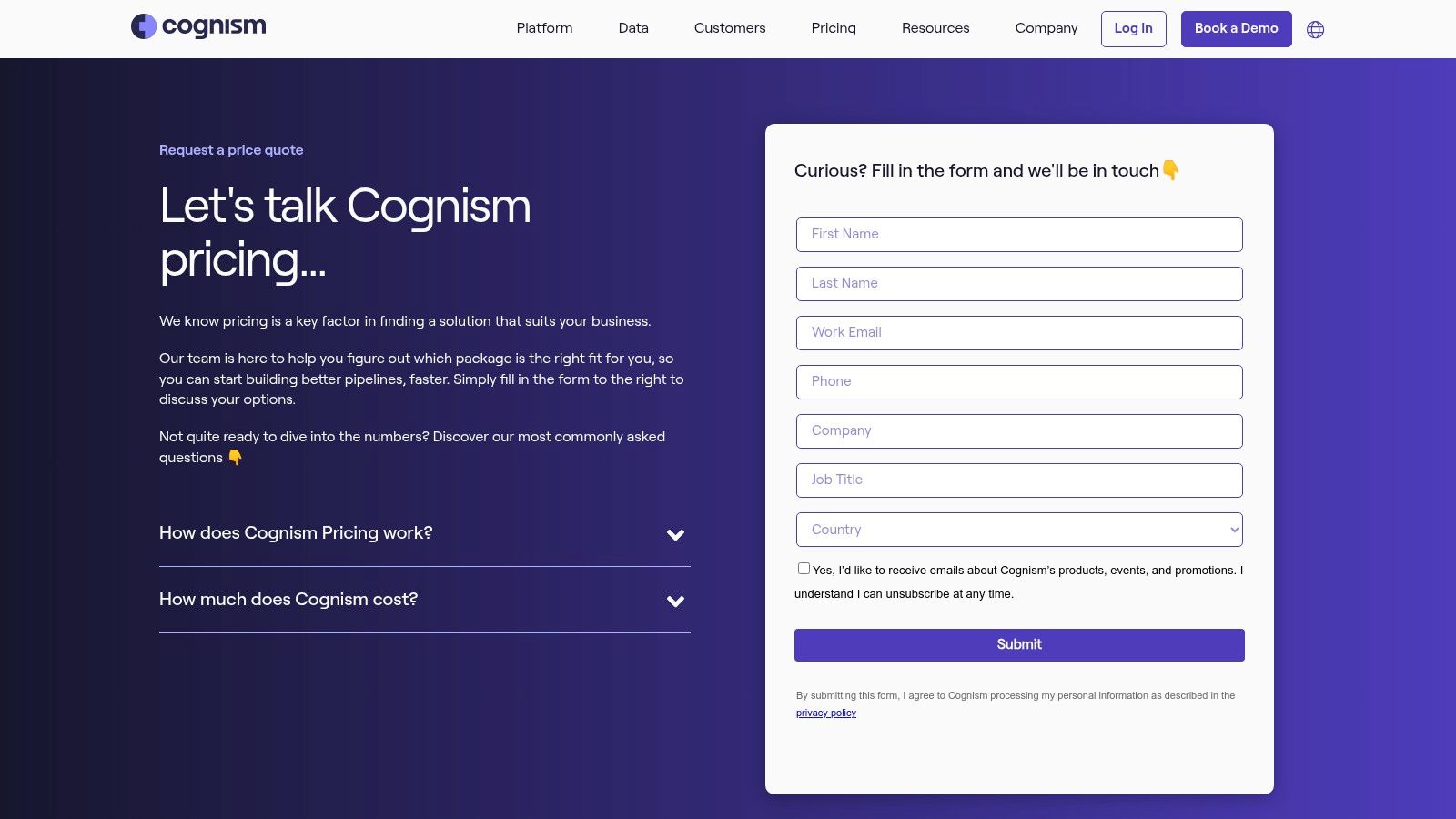
Cognism uses a quote-based pricing model tailored to the number of users and specific data needs, which typically involves annual contracts. Pricing is not publicly listed, and you must contact their sales team for a custom quote. Advanced features and intent data signals may be available as add-ons.
Pros:
- Excellent for sales teams prioritizing high mobile connect rates with verified numbers.
- Strong EMEA/EU coverage and a clear focus on data compliance.
- Live chat support with fast response times and robust admin controls.
Cons:
- Pricing is quote-based only, often requiring an annual commitment.
- Some of the more advanced intent signals and capabilities are priced as add-ons.
Website: https://www.cognism.com/pricing
8. UpLead
UpLead is a B2B contact database and lead generation tool popular with SMBs for its commitment to data accuracy and transparent, credit-based pricing. Its core value proposition is providing high-quality, verified contact information that helps sales teams build targeted prospect lists without the enterprise-level price tag. It’s an excellent choice for businesses looking to execute precise outbound campaigns based on firmographic, technographic, and intent data signals.
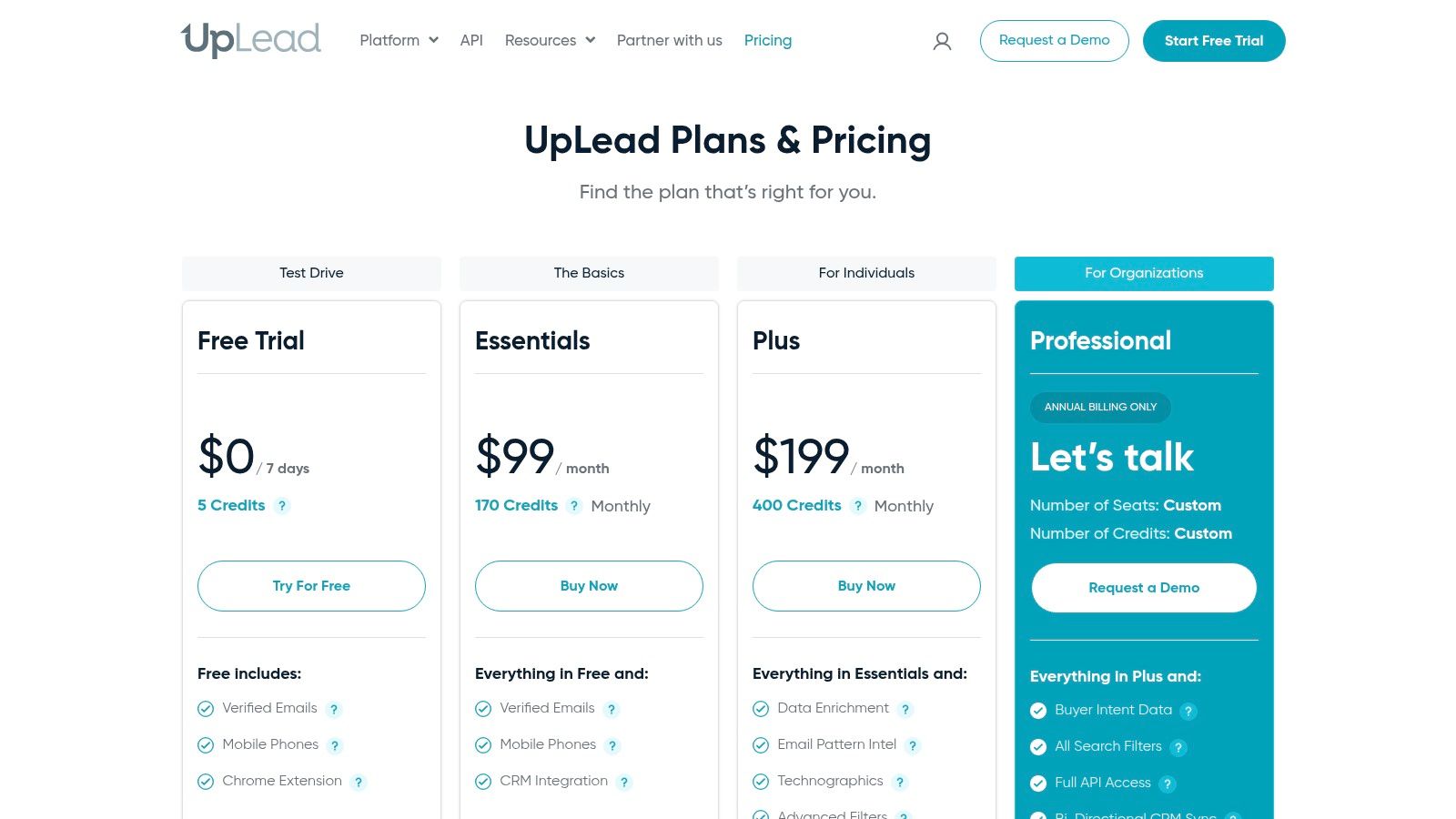
The platform stands out with its real-time email verification process, which checks an email's validity right before you spend a credit to unlock it. This focus on accuracy helps reduce bounce rates and improves the efficiency of email outreach efforts, making it a reliable tool for building clean prospecting lists.
Key Features & Analysis
- Real-Time Email Verification: Before you download contact data, UpLead verifies the email addresses in real time, ensuring you only spend credits on deliverable contacts. This is a critical feature for maintaining sender reputation.
- Advanced Search Filters: Users can segment prospects using over 50 criteria, including technographics (what software a company uses), firmographics (industry, revenue, employee count), and intent data to identify companies actively researching relevant solutions.
- CRM & API Access: UpLead offers direct integrations with popular CRMs like Salesforce, HubSpot, and Pipedrive, allowing for seamless export of contact lists. API access is also available on higher-tier plans for custom workflows.
Pricing Snapshot
UpLead offers a free trial with 5 credits. Paid plans start with the Essentials plan at $74/month (billed annually) for 170 credits per month. The Plus plan is $149/month for 400 credits and includes technographics and team features. Custom Professional plans are available for larger needs.
Pros:
- High data accuracy backed by a 95% guarantee and real-time verification.
- Transparent, credit-based pricing model that’s easy for SMBs to understand.
- Practical for building highly targeted lists without requiring a large annual commitment.
Cons:
- Monthly credit limits on standard plans can be restrictive for high-volume outbound teams.
- The database and feature set, while robust, may not be as expansive as larger, more established competitors.
Website: https://www.uplead.com/pricing/
9. Hunter.io
Hunter.io is a widely-used email discovery and verification platform, praised for its simplicity and accuracy. It’s an excellent starting point for teams building their initial outreach lists or for those who need a reliable way to find and validate email addresses on the fly. Its core value proposition is straightforward: find professional email addresses associated with any domain, verify them to protect your sender reputation, and manage simple outreach campaigns.
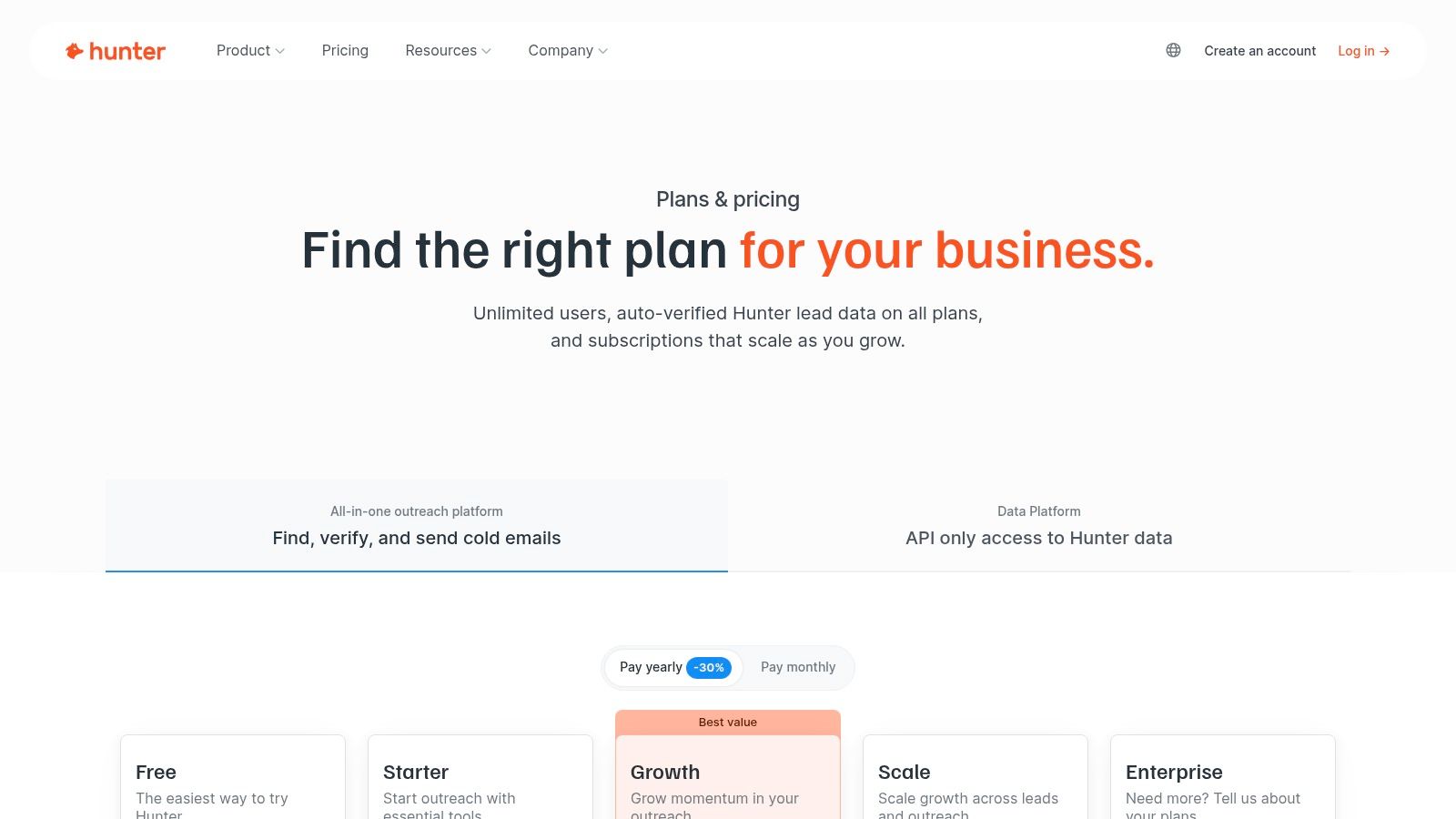
The platform stands out by focusing on doing one thing exceptionally well: email finding and verification. While other b2b lead generation tools offer a broader suite of features, Hunter's laser focus makes it an efficient and cost-effective solution for sales and marketing professionals prioritizing email-centric prospecting.
Key Features & Analysis
- Domain Search & Email Finder: Quickly find all email addresses associated with a specific domain or search for an individual by name and company. Each result includes a confidence score and sources.
- Email Verifier: A crucial tool for maintaining a healthy sender reputation. You can verify single emails or upload a list in bulk to clean your data and reduce bounce rates.
- Lightweight Outreach Campaigns: Hunter includes a basic "Campaigns" feature to send simple, personalized email sequences. It integrates with Gmail and Outlook, making it a good fit for low-volume, targeted outreach.
Pricing Snapshot
Hunter offers a free plan with 25 searches and 50 verifications per month. Paid plans start at €49/month for the Starter plan (500 searches) and scale up to €399/month for the Business plan, which offers 50,000 searches. All paid plans allow unlimited team members to share the pooled credits.
Pros:
- Very affordable and transparent pricing tiers with a generous free plan.
- Strong email verification capabilities help protect sender reputation and improve deliverability.
- Unlimited team members can be added to a single account to share resources.
Cons:
- Strictly email-focused; it does not provide phone numbers or other contact data.
- The outreach campaign features are very basic compared to dedicated sales engagement platforms.
Website: https://hunter.io/pricing
10. Dealfront (Leadfeeder) - Website Visitor Identification
Dealfront (formerly Leadfeeder) is a powerful website visitor identification tool that reveals the companies visiting your website, even if they don't fill out a form. It de-anonymizes your B2B traffic, turning anonymous clicks into actionable leads by identifying the companies behind the IP addresses. This makes it an indispensable tool for marketing and sales teams looking to prioritize accounts that are already showing strong buying intent. It's particularly effective for account-based marketing (ABM) strategies, as it helps time outreach perfectly to accounts actively researching your solutions.
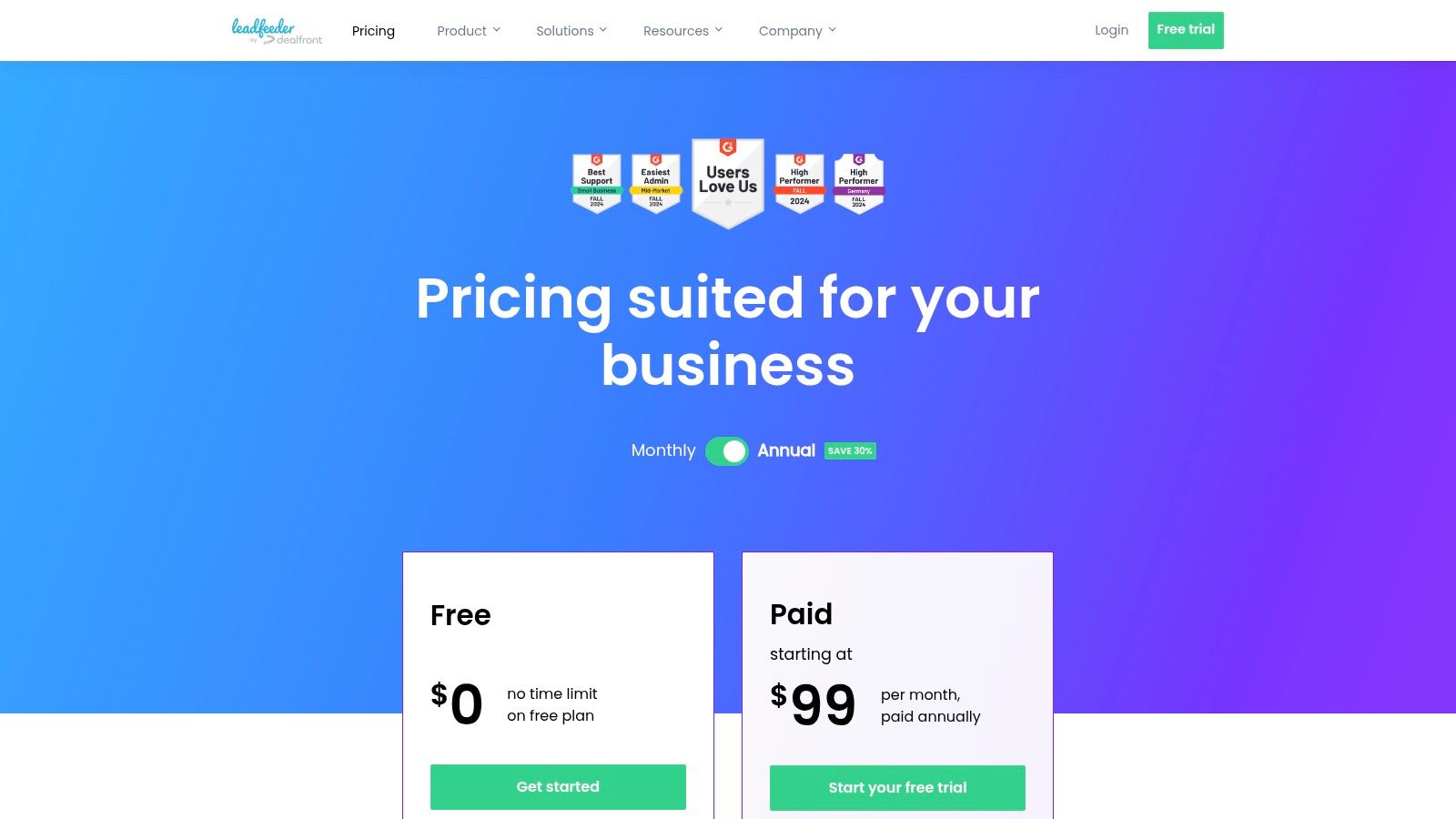
The platform excels at filtering out irrelevant traffic from Internet Service Providers (ISPs) and bots, ensuring you focus only on legitimate business prospects. By connecting company-level visit data with your CRM, you can alert account owners the moment a target account lands on your pricing page, creating timely follow-up opportunities.
Key Features & Analysis
- Company-Level Visitor ID: Identifies the specific companies visiting your site and details which pages they viewed, how long they stayed, and their traffic source.
- Advanced Filtering: Create custom feeds to segment visitors by industry, employee count, or specific pages visited. This helps you route high-value leads to the right sales reps instantly.
- CRM & Automation Integration: Native integrations with major CRMs like Salesforce, HubSpot, and Pipedrive allow you to automatically create new deals or update existing company records with website activity data.
Pricing Snapshot
Dealfront offers a free plan with basic features for up to 7 days of data retention. The paid Lite plan starts at €55/month, offering more identified leads and longer data retention. The Pro plan has custom pricing and adds more advanced features and integrations. A 14-day free trial is available for paid plans.
Pros:
- Excellent for ABM by identifying and timing outreach to active target accounts.
- Strong filtering capabilities to remove low-value traffic and focus on real prospects.
- Good EU data hygiene and a clear, usage-based pricing model with a free starting tier.
Cons:
- Identifies companies, not specific contacts; requires pairing with a contact data tool for outreach.
- Contact reveal credits, if used, are an additional cost on top of the base subscription.
Website: https://www.leadfeeder.com/pricing/
11. Salesloft
Salesloft is a leading sales engagement platform designed to help revenue teams convert qualified leads into customers at scale. It moves beyond simple lead generation by providing the tools to execute complex, multichannel outreach sequences, turning raw contact lists into a predictable pipeline. It is best suited for established sales organizations, particularly those at the enterprise level, that need robust workflows, deep analytics, and comprehensive coaching tools to manage and optimize their sales development efforts.
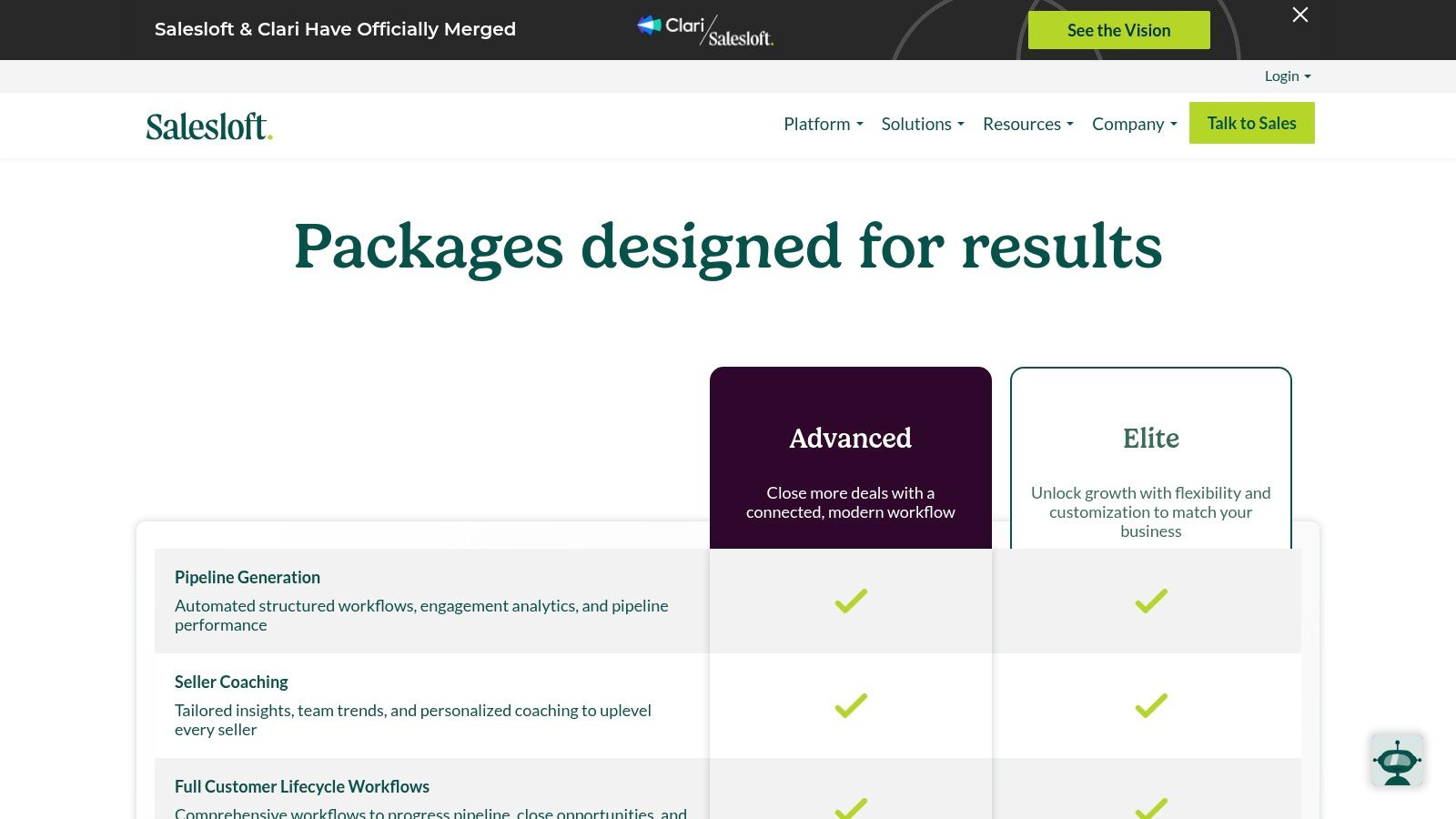
The platform’s key differentiator is its enterprise-ready architecture, which combines powerful sequencing with call coaching, deal intelligence, and forecasting capabilities. This holistic approach empowers sales leaders to not only generate leads but also to analyze performance, coach reps effectively, and predict revenue outcomes with greater accuracy, making it a comprehensive solution among b2b lead generation tools.
Key Features & Analysis
- Multichannel Sequencing: Build and automate sophisticated outreach cadences that combine email, calls, LinkedIn steps, and other tasks. Its integrated dialer includes powerful call coaching features like live call listening and transcription.
- Deep Bi-directional CRM Integrations: Salesloft offers best-in-class, bi-directional sync with Salesforce and other major CRMs, ensuring all activities, lead statuses, and engagement data are logged accurately without manual data entry.
- Robust Analytics & Forecasting: The platform provides detailed dashboards to track every aspect of sales activity and outcome. Optional add-ons for Conversation and Deal Intelligence use AI to surface insights from sales calls and manage pipeline health.
Pricing Snapshot
Salesloft's pricing is quote-based and not publicly listed, tailored to team size and feature requirements. It is generally positioned as an enterprise-grade solution, with packages designed for different needs like Prospect, Sell, Engage, and Enterprise.
Pros:
- Enterprise-ready workflows and reporting provide unparalleled control and visibility.
- Strong partner ecosystem and professional services for seamless implementation.
- Intuitive interface frequently cited by enterprise users for its ease of use.
Cons:
- Pricing is not transparent and can be a significant investment.
- Requires dedicated administrator setup and ongoing training for optimal use.
Website: https://www.salesloft.com/pricing/
12. G2 (Lead Generation category)
G2 is less a single tool and more of a strategic starting point. It's a crowdsourced review marketplace that aggregates user ratings, feature comparisons, and real-world feedback on hundreds of B2B lead generation tools. Its primary value is in helping buyers cut through marketing noise by providing a consolidated view of what actual users think, allowing teams to build a shortlist of vendors that genuinely match their needs, budget, and existing tech stack.
The platform is indispensable during the research and discovery phase of selecting a new tool. By leveraging its detailed filters and side-by-side comparison features, you can quickly evaluate software based on user satisfaction, market presence, and specific functionalities, significantly accelerating your vendor selection process.
Key Features & Analysis
- Category Grids & Rankings: G2 plots vendors on a four-quadrant grid based on user satisfaction and market presence, offering an immediate visual shortlist of category leaders, contenders, and niche players.
- Side-by-Side Vendor Comparisons: Users can select multiple tools and compare them directly on features, pricing models, and review scores. This is crucial for granular, head-to-head evaluations.
- Verified User Reviews & Filtering: Read detailed reviews from verified users and filter them by company size, industry, and user role to find feedback from peers with similar use cases.
Pricing Snapshot
G2 is free to use for browsing reviews, categories, and comparison reports. Vendors pay for premium profiles and additional features, but access for software buyers is entirely open without requiring a signup for most content.
Pros:
- Consolidated, authentic buyer feedback helps validate vendor marketing claims.
- Excellent for building an initial shortlist of tools based on specific criteria like budget or integrations.
- Free and open access makes it a highly accessible research resource.
Cons:
- Vendor-supplied information and marketing snippets can sometimes be present in listings.
- Reported pricing and feature details can occasionally lag behind rapid vendor updates.
Website: https://www.g2.com/categories/lead-generation
Top 12 B2B Lead Gen Tools — Features & Comparison
| Product | Core features | Quality (★) | Pricing/value (💰) | Target (👥) | Unique selling points (✨) |
|---|---|---|---|---|---|
| 🏆 Roger | AI lead discovery, email verification, tone‑matched copy, multi‑channel sequencing & scheduling | ★★★★★ | 💰 $800/mo (Basic) → $3,000+/mo; Enterprise custom; no long‑term commit | 👥 Startups, SMBs, Sales leaders, Agencies, Enterprise | ✨ True end‑to‑end automation; AI mirrors your tone; social enrichment per lead |
| LinkedIn Sales Navigator | Advanced LinkedIn people/account search, alerts, TeamLink | ★★★★☆ | 💰 Seat‑based; mid tier → higher for team features | 👥 Social sellers, ABM teams, SDRs | ✨ First‑party LinkedIn graph & activity signals |
| ZoomInfo | Large contact/company DB, intent data, enrichment & integrations | ★★★★☆ | 💰 Quote‑based; credits & add‑ons can be costly | 👥 Enterprise revenue teams, ops | ✨ Deep datasets, direct dials, robust integration ecosystem |
| Apollo.io | Prospecting DB + outreach/sequences, dialer, CRM sync | ★★★★☆ | 💰 Transparent tiers with generous free tier | 👥 SMB & mid‑market SDRs | ✨ All‑in‑one data + engagement in one UI |
| HubSpot Sales Hub (with Clearbit/Breeze) | CRM + sequences, reporting, embedded enrichment & intent | ★★★★☆ | 💰 Seat‑based; Pro/Enterprise add costs & onboarding fees | 👥 Teams wanting unified CRM + sales stack | ✨ Single platform + marketplace and strong onboarding |
| Lusha | Chrome extension for quick email/phone reveals; CRM plugs | ★★★☆☆ | 💰 Low‑cost; credit system; free plan | 👥 Reps, SMBs needing fast contact reveals | ✨ Instant contact reveals in browser |
| Cognism | Global B2B data, phone‑verified "Diamond Data", intent signals | ★★★★☆ | 💰 Quote‑based; typically annual contracts | 👥 Teams needing EMEA coverage & mobile connect | ✨ Phone‑verified mobile numbers & compliance focus |
| UpLead | Real‑time email verification, technographics, clear credits | ★★★★☆ | 💰 Transparent credit tiers; free trial | 👥 SMBs building targeted lists | ✨ Accuracy guarantees & real‑time verification |
| Hunter.io | Domain/email finder, bulk tools, verifier, basic campaigns | ★★★☆☆ | 💰 Very affordable tiers; free option | 👥 Founders, small teams focused on email deliverability | ✨ Strong email verification & domain research |
| Dealfront (Leadfeeder) | Website visitor de‑anon, company enrichment, CRM connectors | ★★★☆☆ | 💰 Usage‑based pricing; free tier to trial | 👥 ABM teams, marketing & SDRs timing outreach | ✨ Visitor de‑anonymization and intent timing signals |
| Salesloft | Multichannel sequencing, dialer, analytics, forecasting add‑ons | ★★★★☆ | 💰 Quote‑based enterprise pricing | 👥 Enterprise sales orgs & enablement teams | ✨ Enterprise workflows, coaching & deep CRM sync |
| G2 (Lead generation category) | Review marketplace, vendor rankings, side‑by‑side comparisons | ★★★☆☆ | 💰 Free to browse; vendor paid listings | 👥 Buyers shortlisting lead‑gen vendors | ✨ Crowdsourced reviews, “Best Of” category rankings |
Building Your Ultimate Sales Stack: From Tools to Strategy
Navigating the expansive landscape of B2B lead generation tools can feel overwhelming. We've explored a dozen powerful solutions, from the foundational data intelligence of ZoomInfo and Cognism to the comprehensive engagement features of Salesloft and the all-in-one power of platforms like Apollo.io. The single most important takeaway is this: there is no universally "best" tool. The right choice is a direct reflection of your company's unique stage, goals, and operational capacity.
The journey from manual prospecting to a high-performance, automated sales engine is not about accumulating the most software. It's about strategically layering solutions to address specific bottlenecks in your process. A scattered approach, where you buy a tool for every minor inconvenience, leads to a bloated, expensive, and disconnected tech stack that creates more friction than it resolves. True efficiency comes from a thoughtful, phased implementation.
A Simple Framework for Building Your Stack
To avoid the common pitfalls of tool overload, consider this strategic framework for building or auditing your sales technology. This approach ensures you're solving the right problems in the right order.
Start with Clean Data (The Foundation): Your entire outbound motion is built on the accuracy of your contact and company data. Without a reliable source of truth, your outreach efforts are wasted. Tools like Lusha, UpLead, or Cognism are critical starting points. Prioritize a solution that provides accurate, verified contact details and firmographics that align perfectly with your Ideal Customer Profile (ICP). This is the non-negotiable first layer.
Add a System for Outreach (The Engine): Once you have clean data, you need an efficient way to engage with those prospects. This is where outreach and engagement platforms come in. Salesloft or HubSpot Sales Hub provide the infrastructure to build multi-channel sequences, track engagement, and manage conversations at scale. This layer transforms your data from a static list into a dynamic pipeline of opportunities.
Evaluate Full Automation (The Accelerator): With a solid foundation of data and an efficient outreach system, the next bottleneck becomes scale. This is the point where managing the complexities of multiple B2B lead generation tools, hiring and training SDRs, and manually optimizing campaigns becomes a full-time job. Platforms like Roger step in here, offering a fully managed, AI-powered solution that handles the entire top-of-funnel process, from data sourcing to meeting booking. This is the final layer for teams that want to bypass the operational complexity and focus exclusively on closing qualified deals.
Final Considerations for Implementation
As you select and implement these tools, remember that technology is only an enabler. Your strategy must lead the way. Before you sign any contract, clearly define your ICP, map out your sales process, and establish clear KPIs. A tool implemented without a clear strategy is just an expensive database.
Furthermore, consider the evolving role of artificial intelligence in this space. As you build your stack, it's wise to keep an eye on how AI is reshaping prospecting and personalization. To further enhance your sales stack with cutting-edge solutions, you might want to explore the top AI-powered lead generation tools to understand how these technologies can provide a competitive edge.
Ultimately, the goal is to construct a lean, integrated, and powerful sales stack that empowers your team to do what they do best: build relationships and close business. Use this guide not as a simple catalog, but as a strategic map to audit your current process, identify critical gaps, and make informed decisions that will fuel your growth for years to come.
Tired of juggling multiple B2B lead generation tools and managing complex outbound campaigns? Roger combines world-class data, AI-powered personalization, and a fully managed service to book qualified meetings directly on your calendar. Stop building the machine and start closing the deals by visiting Roger to see how we can build your pipeline for you.